Hali Dev

Cutthroat Atlas

Cutthroat Species Guide

A visual field-guide style overview of major cutthroat trout lineages, their historic watersheds, conservation questions, and the messy taxonomy behind western native trout.

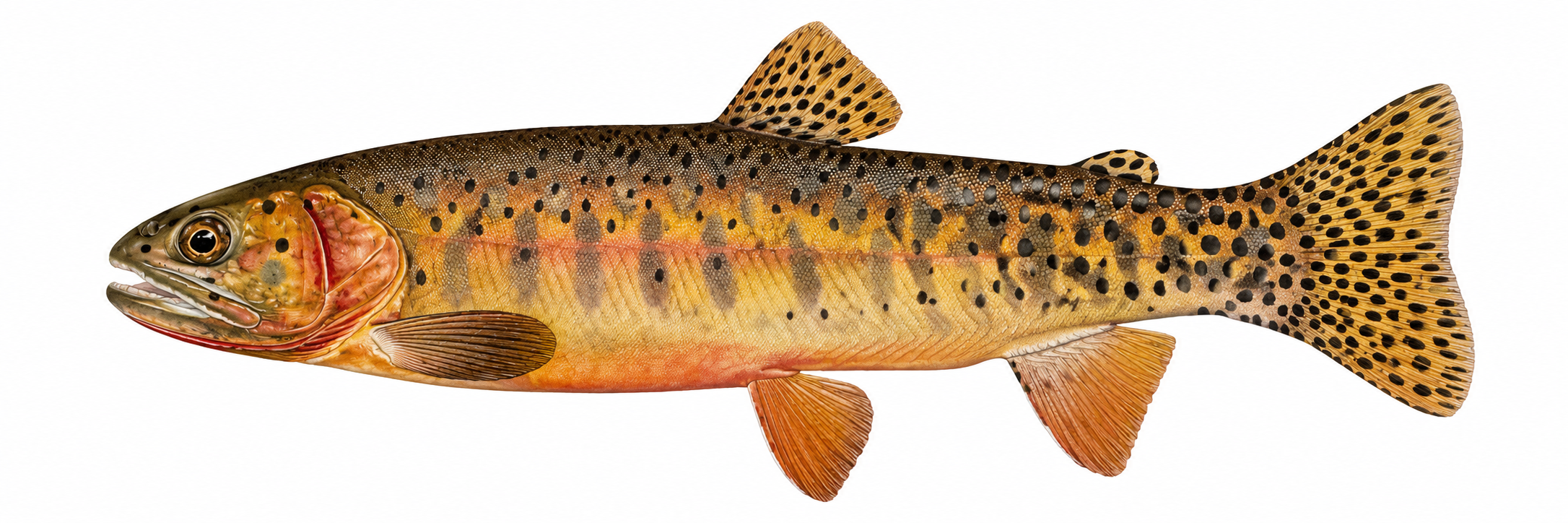
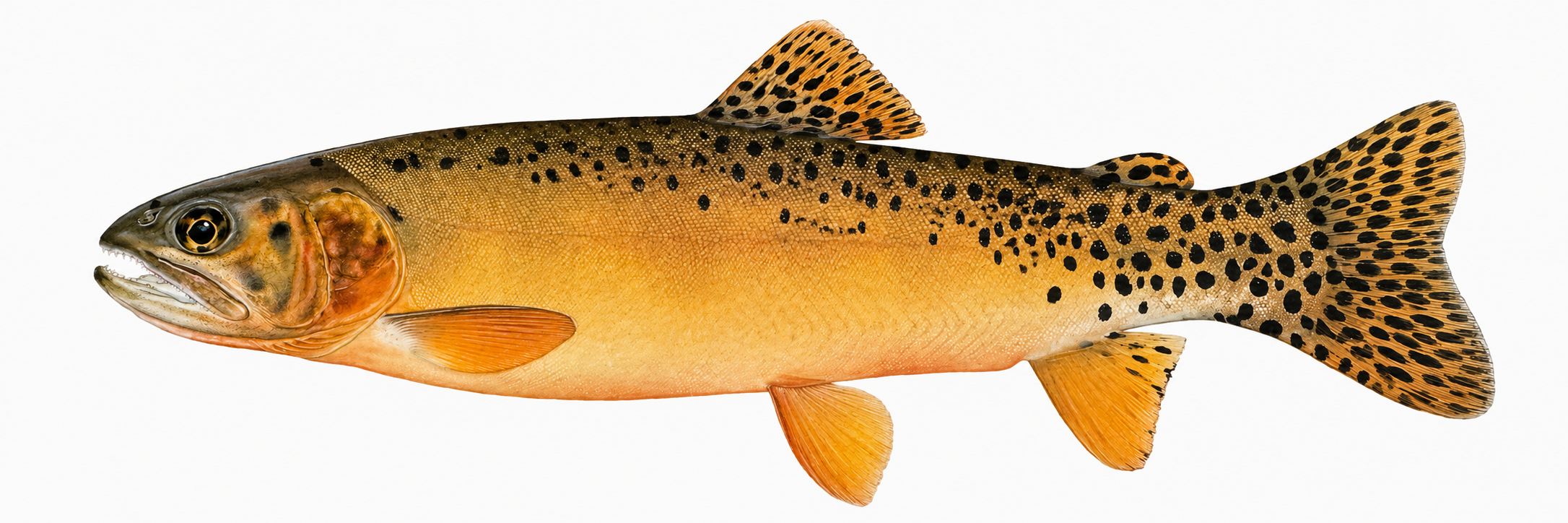
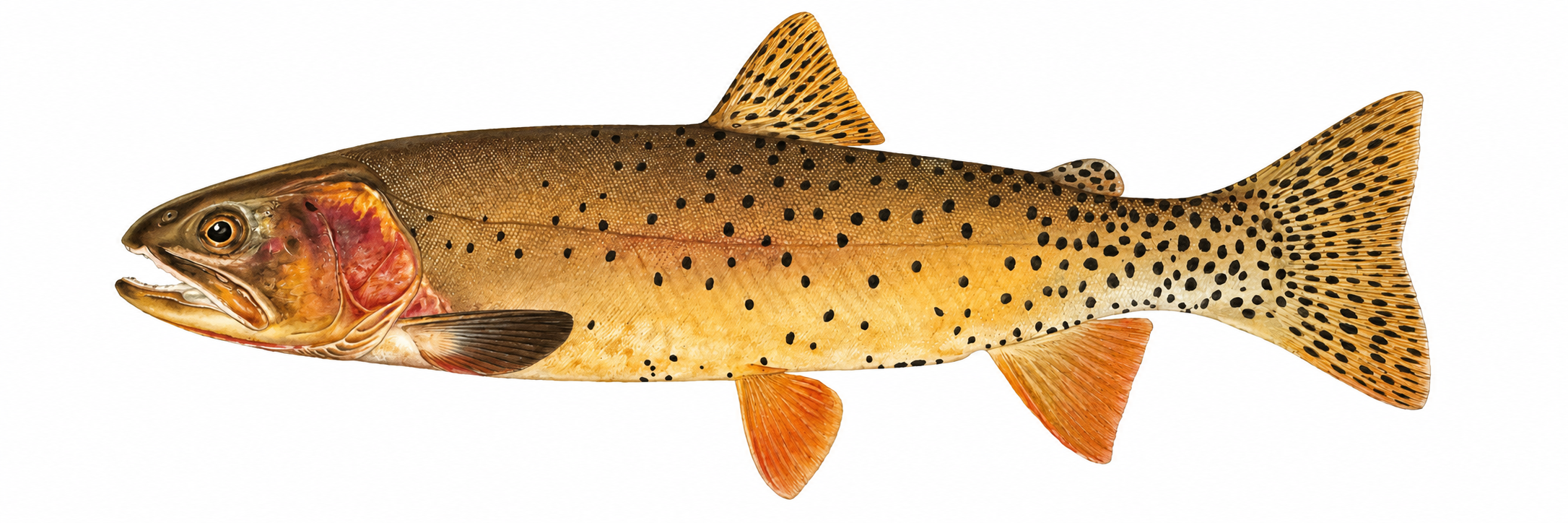
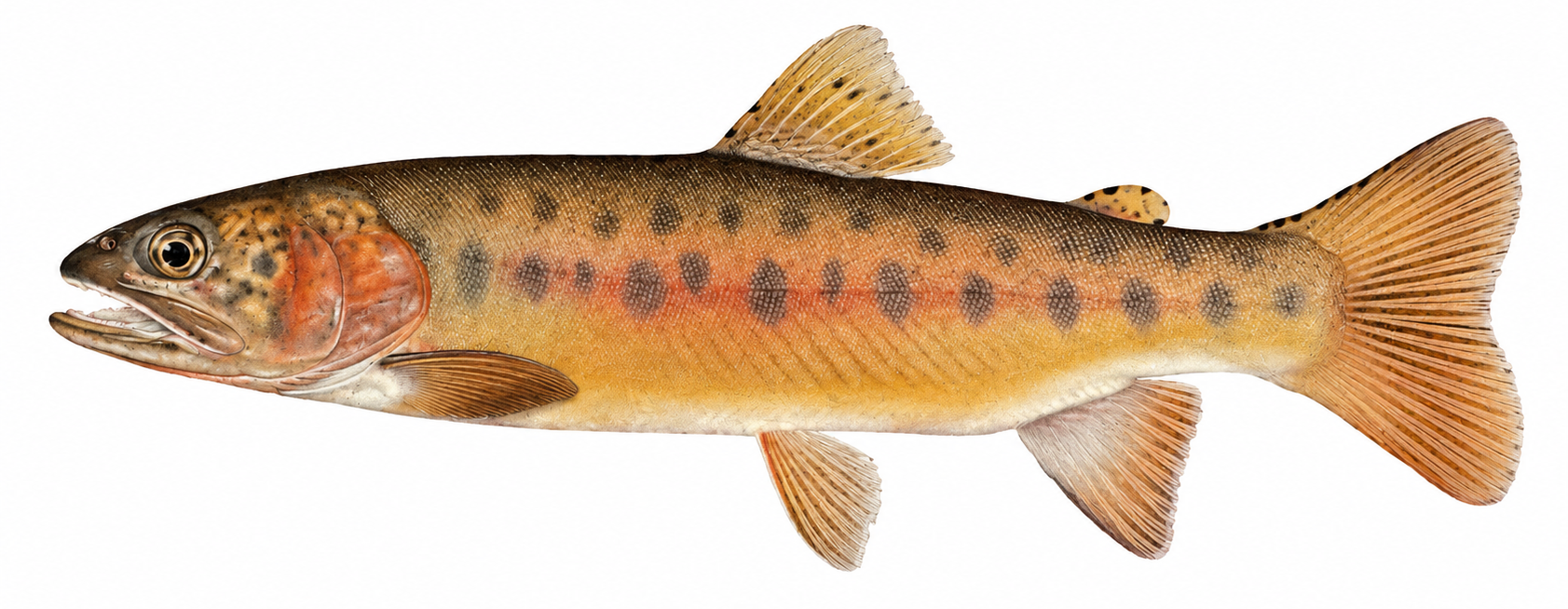
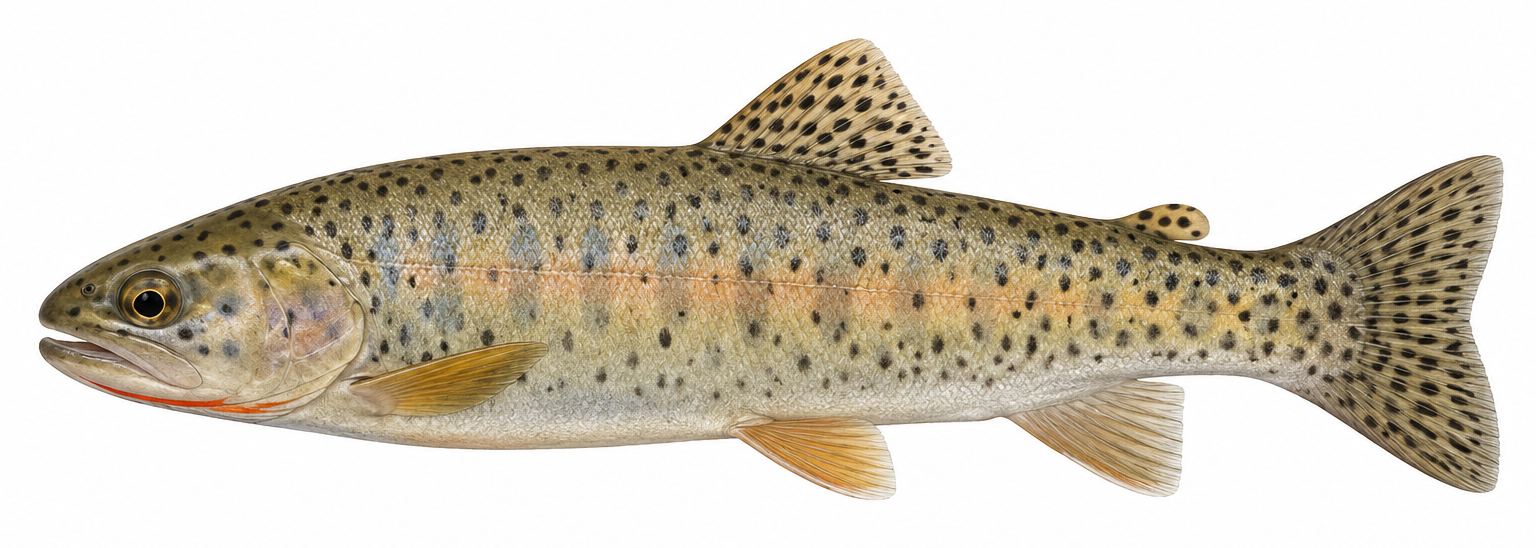
Greenback cutthroat trout illustration

Greenback Cutthroat Trout

Oncorhynchus clarkii stomias

South Platte Recovery Focus Taxonomy Debate

Greenback cutthroat are tied most strongly to the South Platte drainage and remain one of Colorado’s most important native trout recovery stories. Older records placed “greenbacks” more broadly across the eastern slope, including the Arkansas Basin, but later genetic work made that picture far more complicated. Today, Greenback is best treated here as the South Platte lineage, with Arkansas Basin records handled carefully because of Yellowfin, stocking history, and possible misidentification.

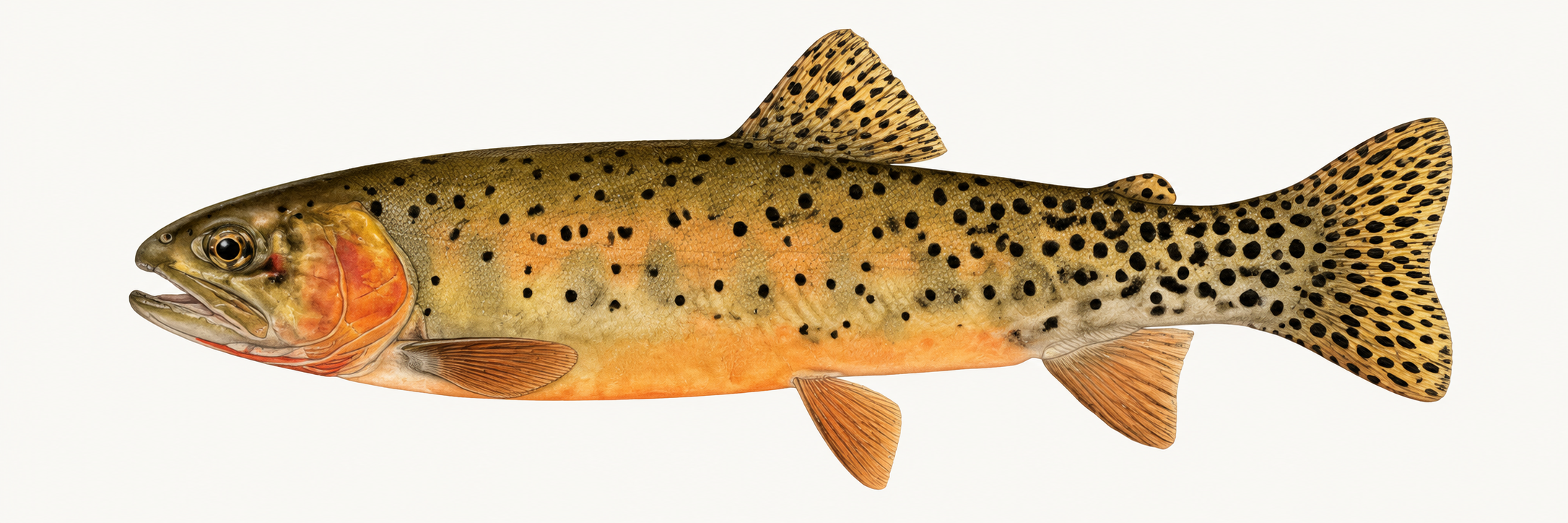
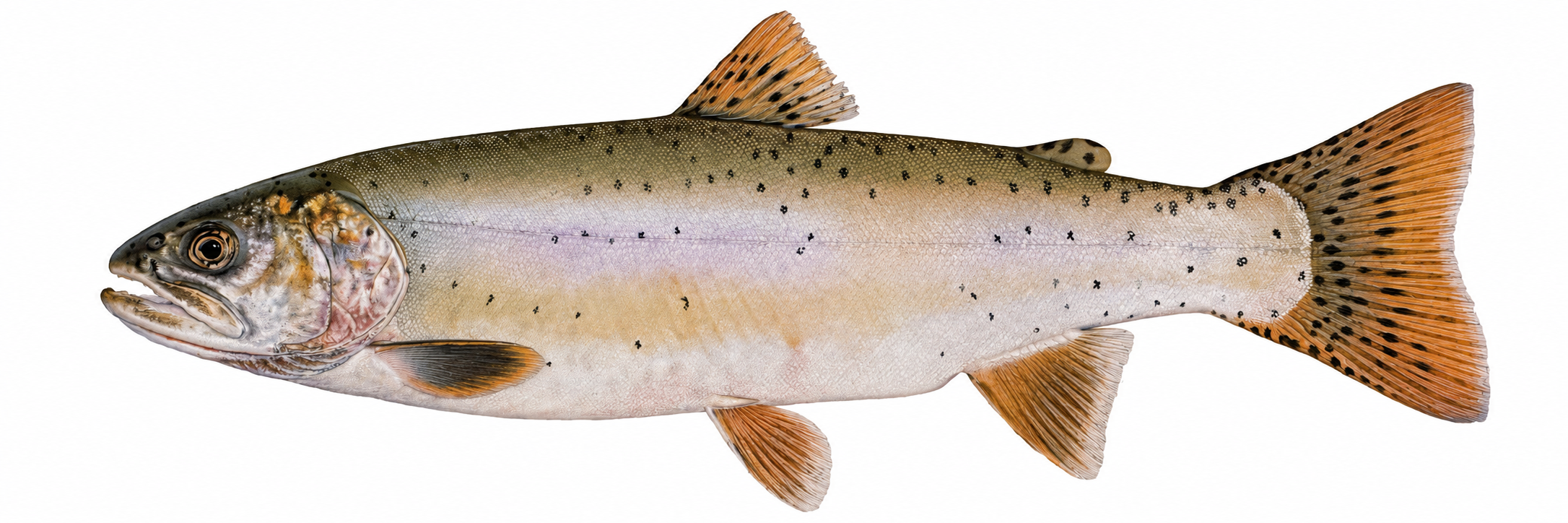
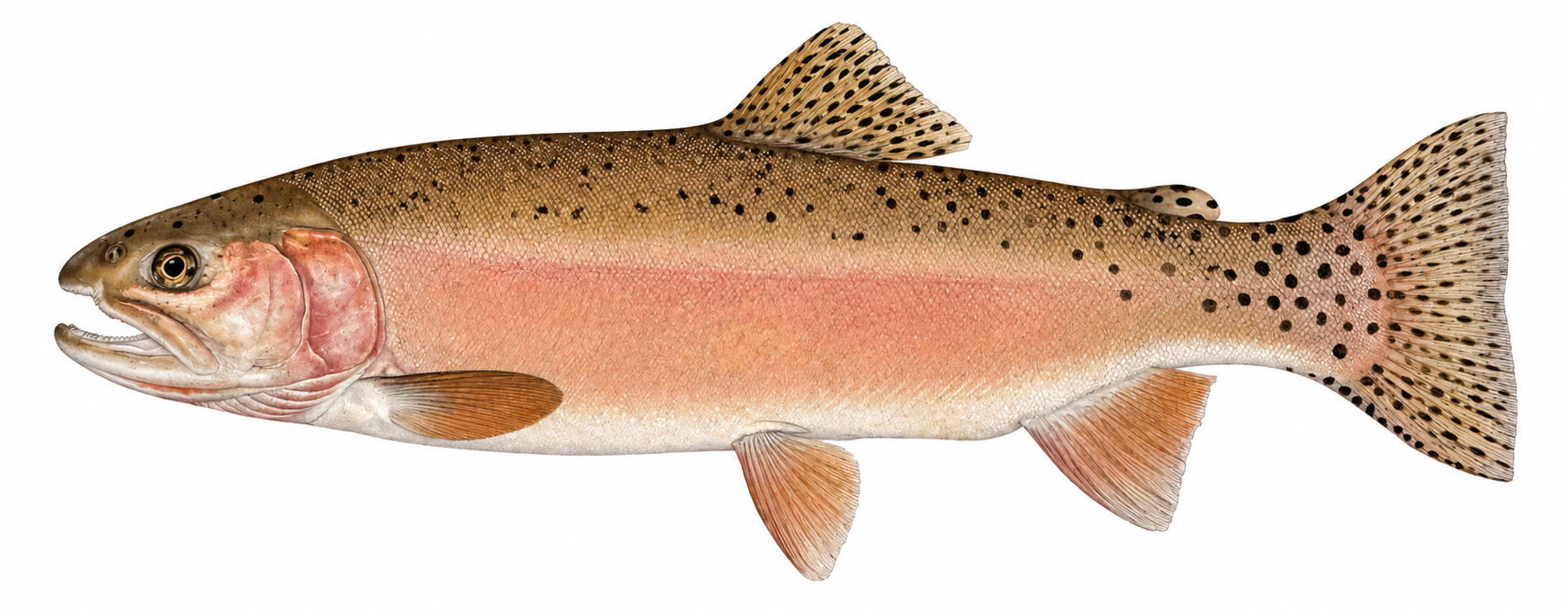
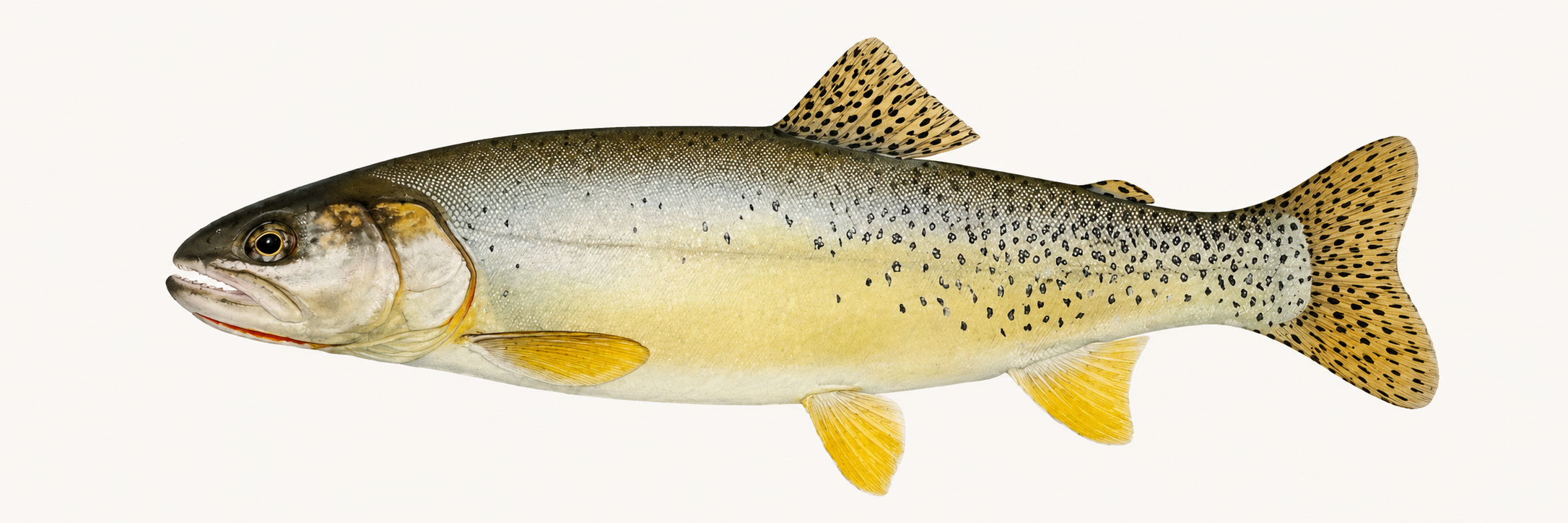
Colorado River cutthroat trout illustration

Colorado River Cutthroat Trout

Oncorhynchus clarkii pleuriticus

Colorado River Basin Green Lineage West Slope

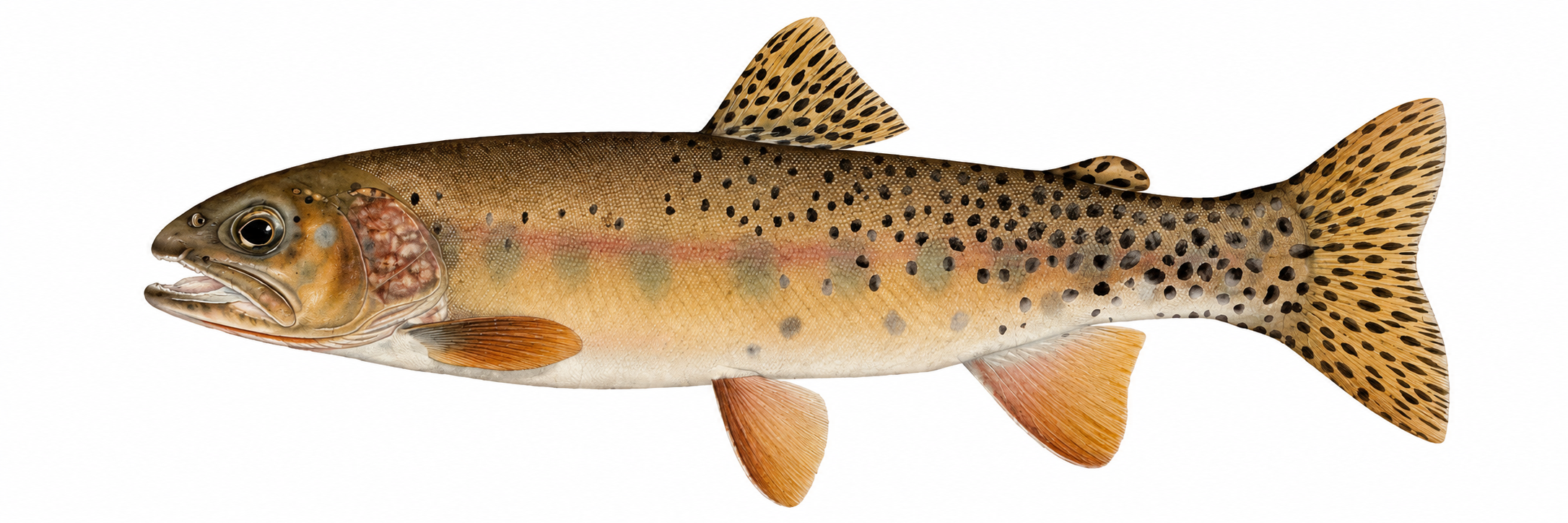
Colorado River cutthroat represent the western-slope side of Colorado’s native trout story, but even this name hides several layers of complexity. Green Lineage fish appear connected to the upper Colorado, Gunnison, Dolores, and related drainages, while historical stocking and older naming conventions blurred the boundaries between western-slope fish and eastern-slope records. They are key to understanding why Colorado cutthroat taxonomy has changed so much in the genetics era.

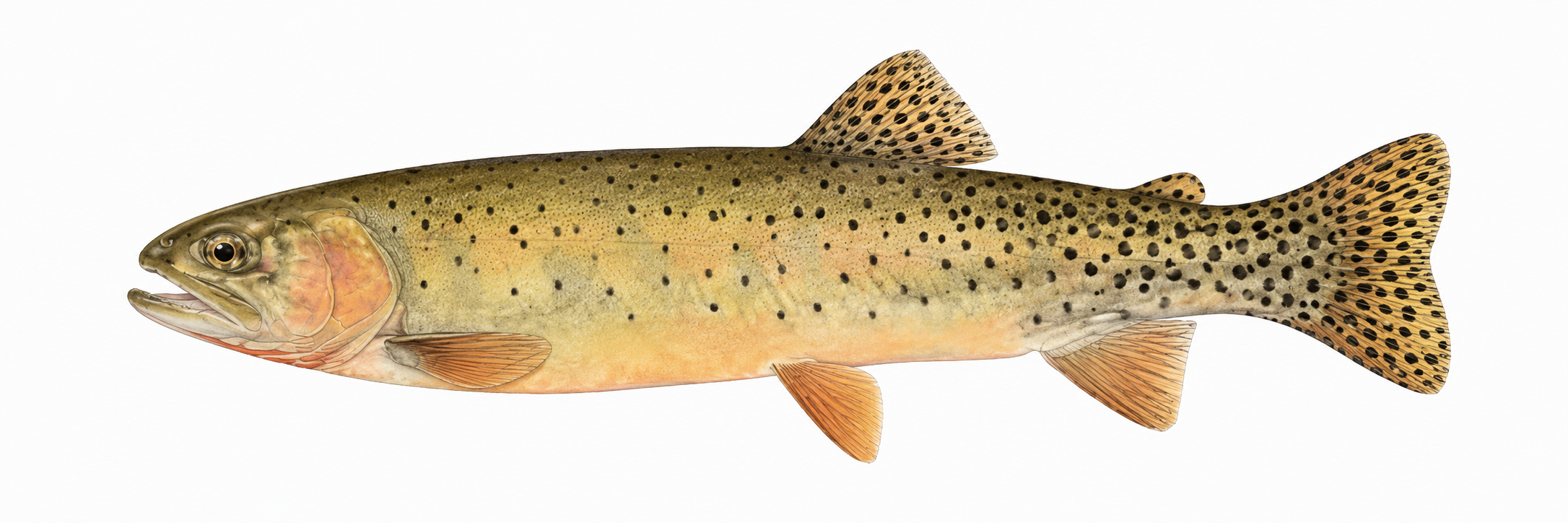
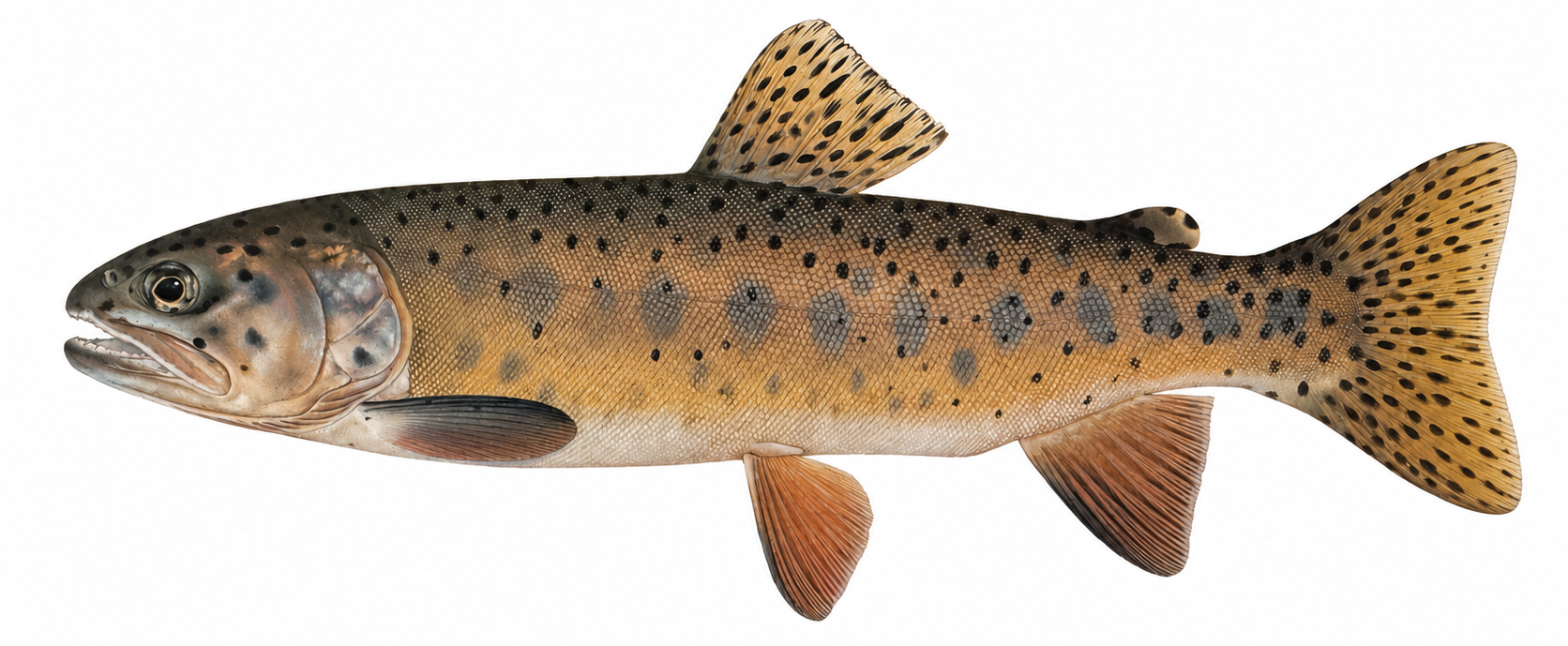
San Juan cutthroat trout illustration

San Juan Cutthroat Trout

Oncorhynchus clarkii ssp. / San Juan lineage

San Juan Basin Rediscovered Lineage Wolf Creek Restoration

San Juan cutthroat are a rediscovered native lineage from the San Juan Basin of southwest Colorado. They were once thought to be extinct until genetic comparisons with preserved 1874 San Juan River specimens revealed surviving remnant populations. Their recovery work shows why old museum specimens matter: they can reconnect living fish to lost drainages and restore lineages that were nearly erased from the map.

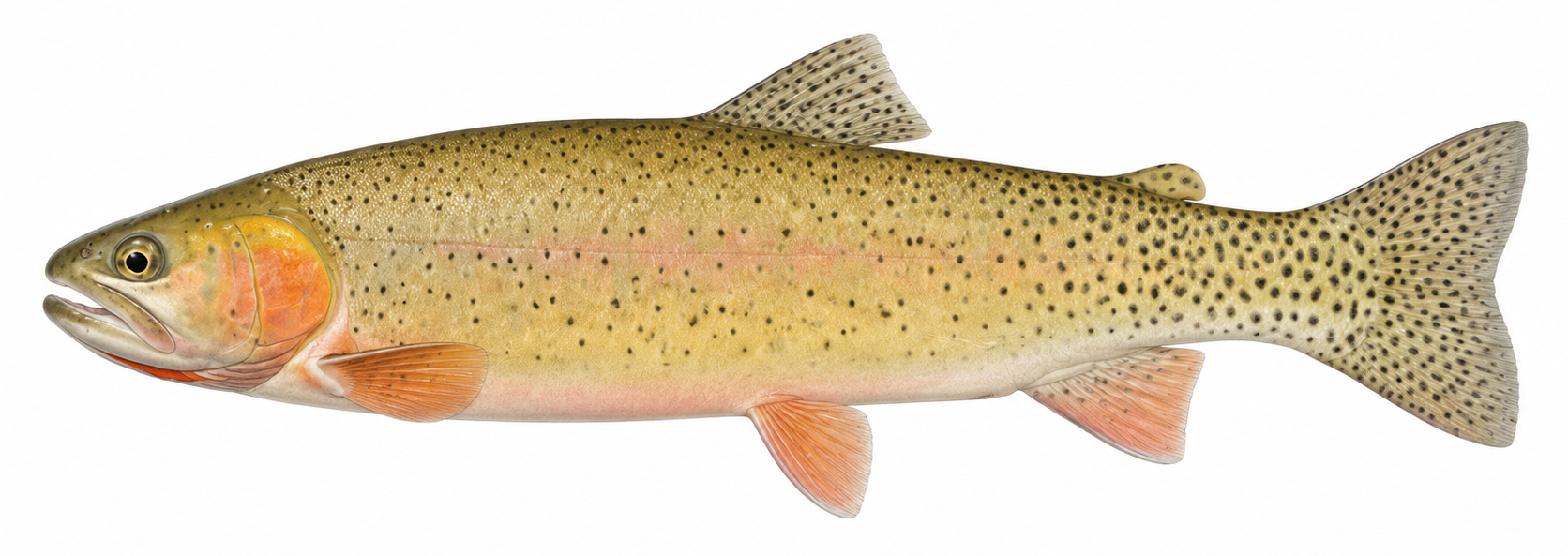
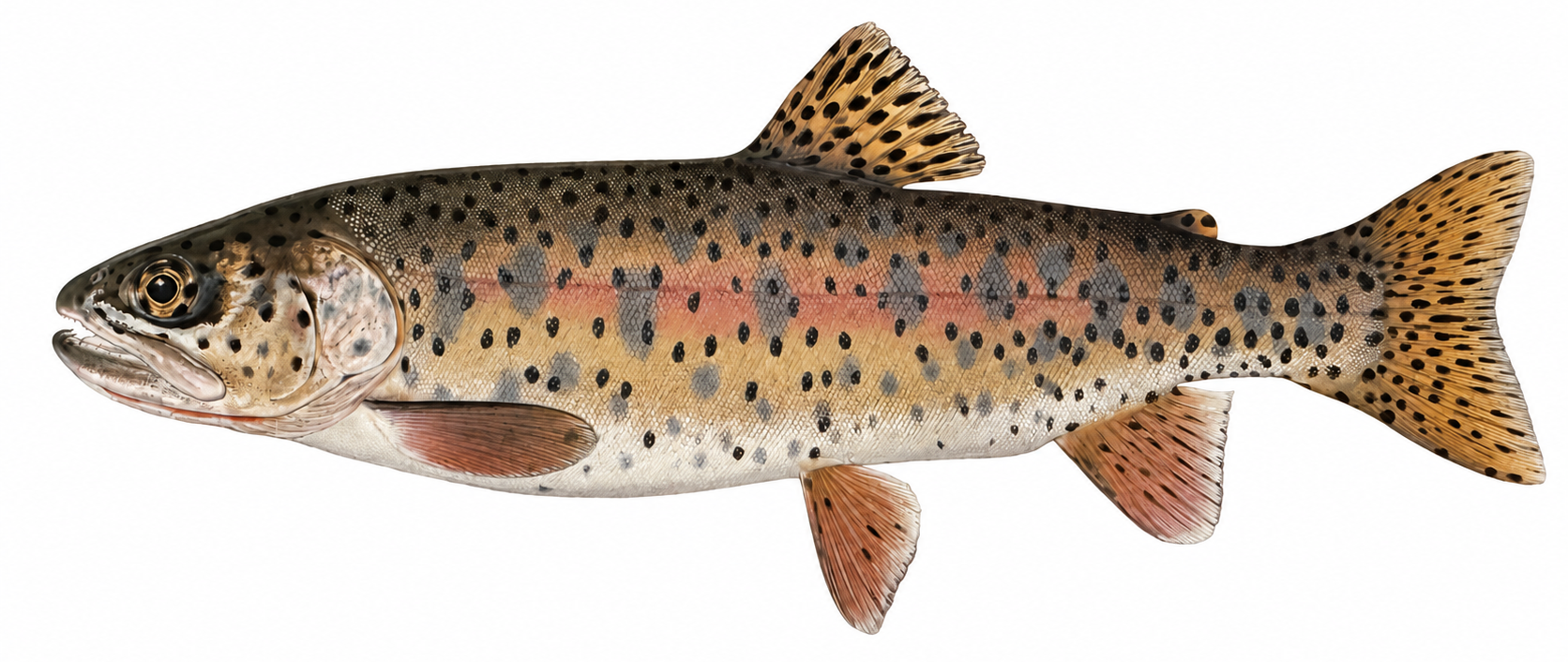
Green River cutthroat trout illustration

Green River Cutthroat Trout

Oncorhynchus clarkii — Green River / Blue Lineage

Green River Basin Blue Lineage Colorado River Complex

Green River cutthroat represent the Blue Lineage within the broader Colorado River cutthroat complex. They are closely tied to the Green River system and help separate the old, broad “Colorado River cutthroat” concept into more precise conservation lineages. For this atlas, they matter because they show how ancient drainage history, isolation, and widespread historic stocking can all shape what we see on the landscape today.

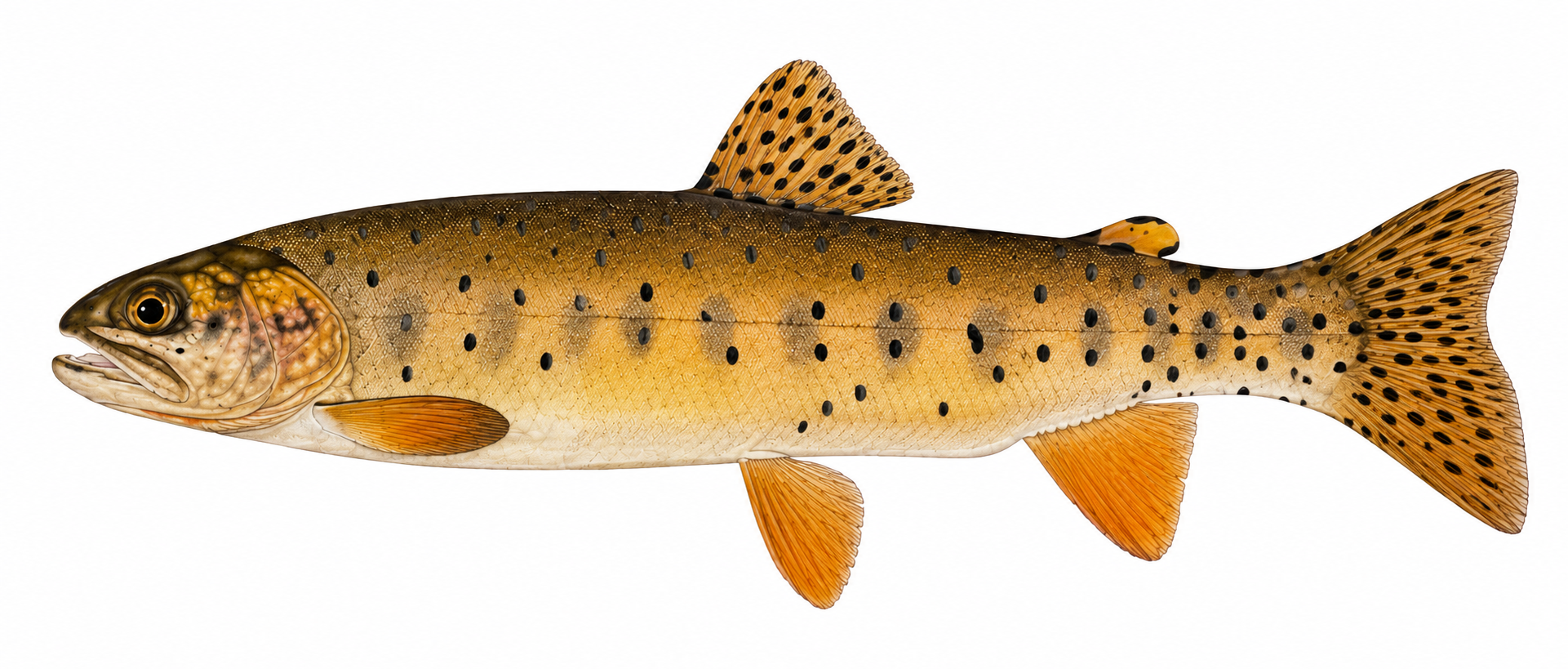
Rio Grande cutthroat trout illustration

Rio Grande Cutthroat Trout

Oncorhynchus clarkii virginalis

Rio Grande Basin Southern Rockies Native Trout

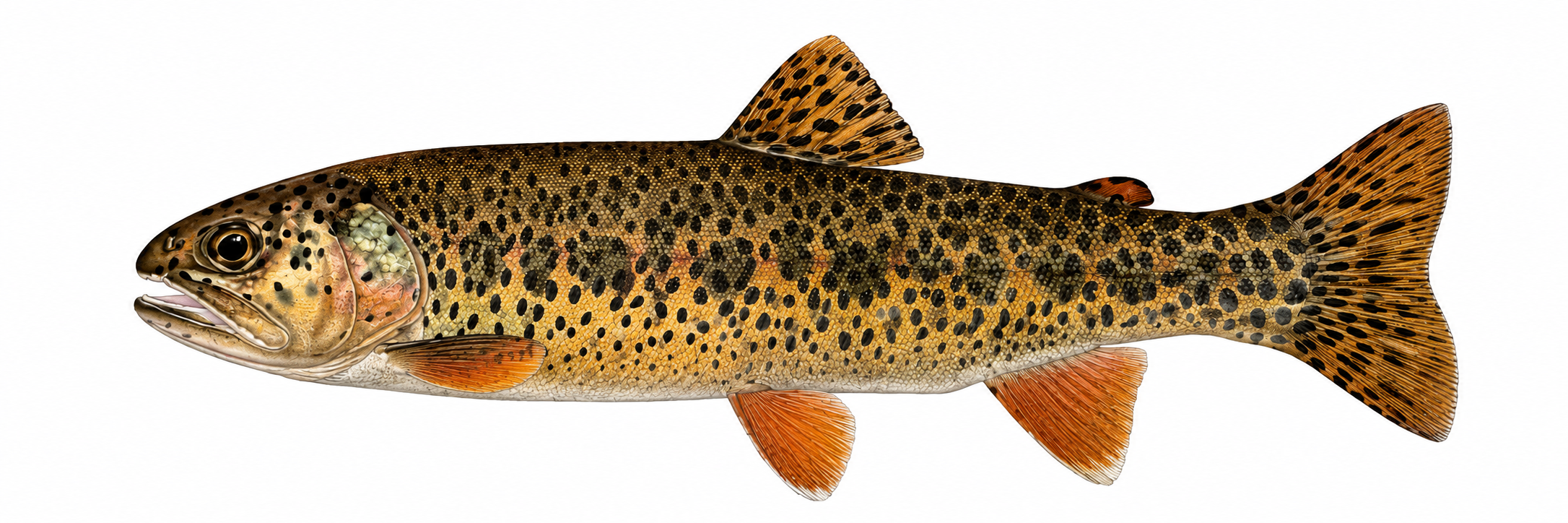
Rio Grande cutthroat are the southern Rocky Mountain branch of the cutthroat story, historically tied to the Rio Grande drainage and nearby headwaters in Colorado and New Mexico. They often show warm rose, orange, and yellow tones, with spotting concentrated more heavily toward the rear of the body. Their conservation story is still active, with agencies and partners restoring populations by removing nonnative trout and reintroducing native Rio Grande cutthroat into protected waters.

Lahontan cutthroat trout illustration

Lahontan Cutthroat Trout

Oncorhynchus clarkii henshawi

Great Basin Lake Form Stream Form

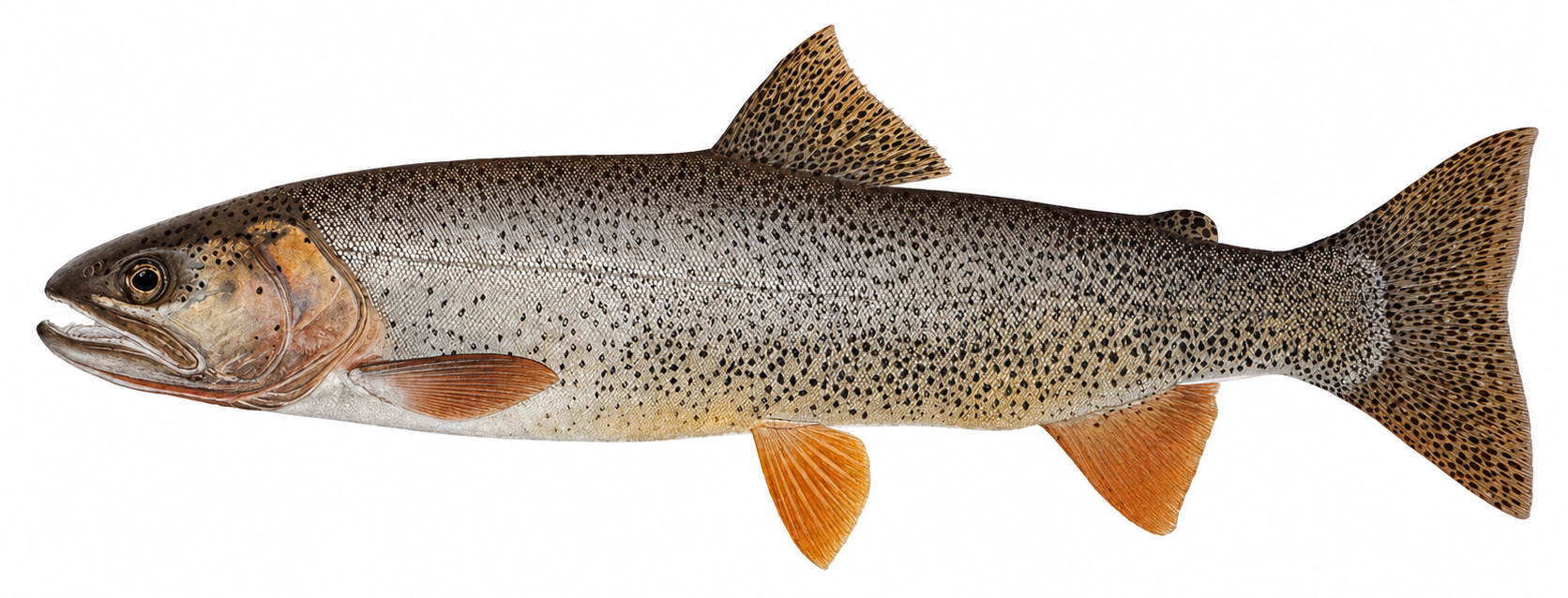
Lahontan cutthroat are the great lake-and-desert-basin cutthroat of the West. Native to the Lahontan Basin, they can express very different life histories, from small stream-resident fish to large lake-form trout capable of exceptional size. Their story is especially useful for this atlas because it shows how one cutthroat lineage can produce both stream and lake forms depending on habitat, isolation, and basin history.

Bear River and Bear Lake cutthroat trout illustration

Bear River Cutthroat Trout

Oncorhynchus clarkii — Bear River lineage

Bear River Bear Lake Form Yellowstone Affinity

Bear River cutthroat occupy the Bear River watershed within the Bonneville Basin, but genetics show they are more closely related to Yellowstone/Snake River cutthroat than to Bonneville cutthroat from the rest of the basin. That makes them a perfect example of why watersheds and ancestry do not always tell the same story. Bear Lake cutthroat are the large lake-form expression of this Bear River lineage.

Bonneville cutthroat trout illustration

Bonneville Cutthroat Trout

Oncorhynchus clarkii utah

Bonneville Basin Great Basin Ancient Lake System

Bonneville cutthroat are native to the ancient Lake Bonneville drainage across parts of Utah, Idaho, Wyoming, and Nevada. Their modern populations are often isolated in streams that remain from a much larger pluvial lake system. They are important because the Bonneville Basin contains multiple related but complicated cutthroat forms, including the distinct Bear River/Bear Lake lineage that sits geographically inside the basin but genetically points elsewhere.

Yellowstone cutthroat trout illustration

Yellowstone Cutthroat Trout

Oncorhynchus clarkii bouvieri

Yellowstone Basin Snake River Headwaters Interior West

Yellowstone cutthroat are native to the Greater Yellowstone region and surrounding drainages, including the Yellowstone River, Snake River, and related headwater systems. In Montana, their native story is tied mainly to the Yellowstone drainage rather than the upper Missouri headwaters. They are one of the best-known interior cutthroat lineages and sit near the center of several neighboring taxonomy questions, including the relationship between Yellowstone, Snake River finespotted, and Bear River cutthroat.

Snake River finespotted cutthroat trout illustration

Snake River Finespotted Cutthroat Trout

Oncorhynchus clarkii behnkei

Snake River Fine Spotting Yellowstone Complex

Snake River finespotted cutthroat are associated with the upper Snake River drainage and are recognized by their dense, fine spotting pattern across the body and fins. They are closely connected to the Yellowstone cutthroat complex, and some modern treatments consider them a localized form rather than a deeply separate lineage. For this atlas, they are included because their appearance, drainage history, and conservation identity remain distinct enough to matter on the landscape.

Coastal cutthroat trout illustration

Coastal Cutthroat Trout

Oncorhynchus clarkii clarkii

Pacific Coast Sea-Run Forms Stream Resident Forms

Coastal cutthroat occupy the Pacific coastal region and are one of the most flexible cutthroat lineages. In connected waters they may include resident, freshwater-migratory, and sea-run forms within the same broader system. That life history diversity makes Coastal cutthroat an important comparison point for understanding how trout can adapt to streams, estuaries, and nearshore marine environments without becoming a single simple “type.”

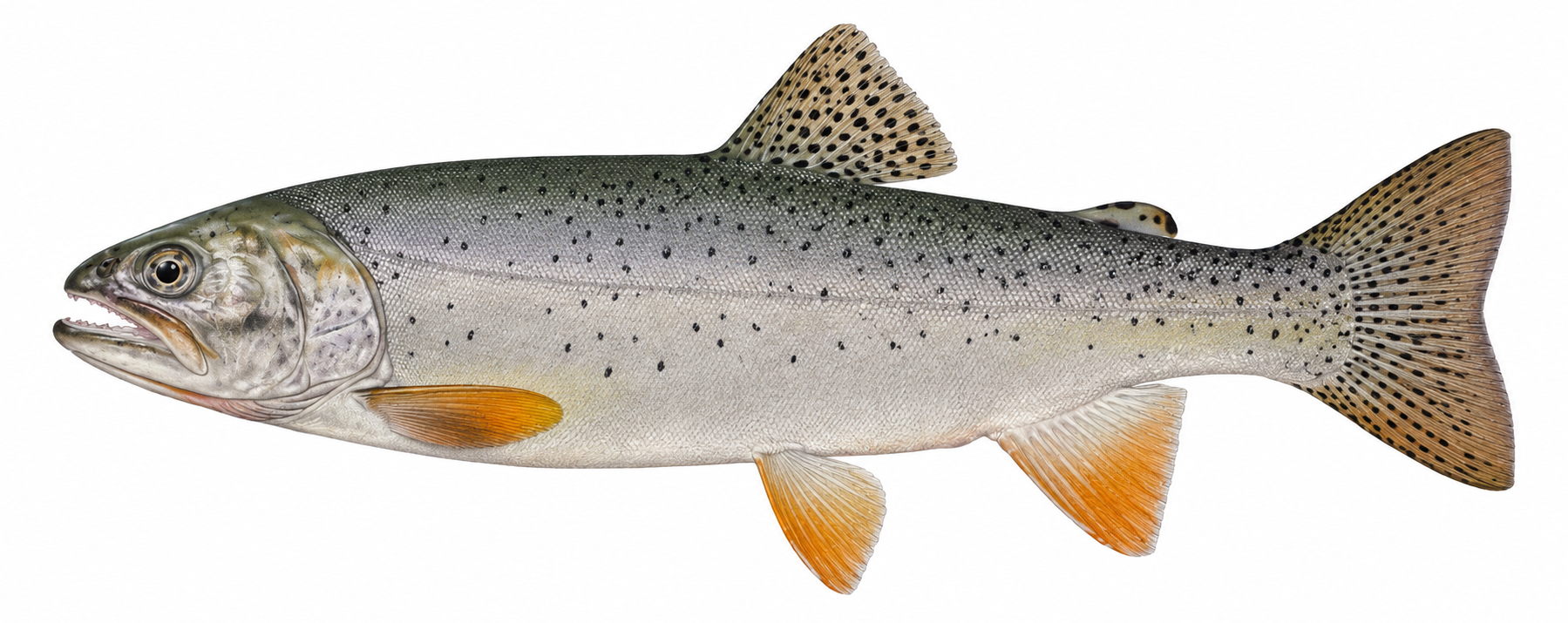
Westslope cutthroat trout illustration

Westslope Cutthroat Trout

Oncorhynchus clarkii lewisi

Northern Rockies Columbia Basin Missouri Headwaters

Westslope cutthroat are native to parts of the northern Rocky Mountains, with a range centered on western drainages such as the Columbia Basin but also extending east of the Continental Divide into the upper Missouri River drainage. Their name can be misleading: they are strongly associated with west-slope waters, yet part of their native range reaches the Missouri headwaters of Montana. That divide-spanning range makes them one of the major northern branches of the cutthroat story.

Paiute cutthroat trout illustration

Paiute Cutthroat Trout

Oncorhynchus clarkii seleniris

Lahontan Basin Highly Restricted Recovery Lineage

Paiute cutthroat are one of the most restricted cutthroat lineages, native to Silver King Creek in the Carson River drainage of the Sierra Nevada. They are closely related to Lahontan cutthroat but are distinctive for their reduced body spotting and very limited native range. Their recovery story is a major example of how a tiny headwater lineage can survive through refuge populations, stream restoration, and long-term protection.

Alvord cutthroat trout illustration

Alvord Cutthroat Trout

Oncorhynchus clarkii alvordensis

Alvord Basin Presumed Extinct Desert Basin

Alvord cutthroat were associated with the Alvord Basin of southeastern Oregon and northern Nevada. They are generally treated as extinct, making them one of the lost desert-basin branches of the cutthroat family. Their inclusion here matters because they show how many isolated western basins once held their own distinct trout forms before habitat change, nonnative trout, and range fragmentation erased much of that history.

Whitehorse Basin cutthroat trout illustration

Whitehorse Basin Cutthroat Trout

Oncorhynchus clarkii — Whitehorse / Coyote Basin lineage

Whitehorse Basin Coyote Basin Desert Headwaters

Whitehorse Basin cutthroat are part of the desert-basin cutthroat complex of southeastern Oregon, often discussed with the Coyote Basin or Willow-Whitehorse forms. These fish reflect the same pattern seen across the Great Basin: small, isolated drainages producing distinct trout populations through long separation. They help show how even nearby desert basins can hold different evolutionary stories.

Humboldt cutthroat trout illustration

Humboldt Cutthroat Trout

Oncorhynchus clarkii — Humboldt lineage

Humboldt River Lahontan Basin Interior Nevada

Humboldt cutthroat are tied to the Humboldt River system and the broader Lahontan Basin of interior Nevada. Their populations reflect the fragmented hydrology of desert streams, where cold headwater refuges can become isolated from one another over long periods. They are useful for comparing the Lahontan Basin’s many related but locally distinct cutthroat forms.

Quinn River cutthroat trout illustration

Quinn River Cutthroat Trout

Oncorhynchus clarkii — Quinn River lineage

Quinn River Lahontan Basin Desert Stream Form

Quinn River cutthroat are a northeastern Lahontan Basin lineage associated with small desert-stream habitats. Their subtle coloration, modest size, and restricted range make them easy to overlook compared with larger lake-form trout, but they are important because they represent another isolated branch of the Lahontan Basin cutthroat complex. For the atlas, they help complete the desert-basin side of the story.